the garden
The garden is the central object of Alice's desire throughout her adventures in Wonderland, a beautiful, tranquil space glimpsed early but only reached after a series of bewildering trials. It represents the promise of order, beauty, and escape from the chaotic, rule-bound world she has fallen into, and its eventual attainment marks a turning point in her journey, though the garden itself proves to be a site of further absurdity and danger.
First Glimpse and Unattainability
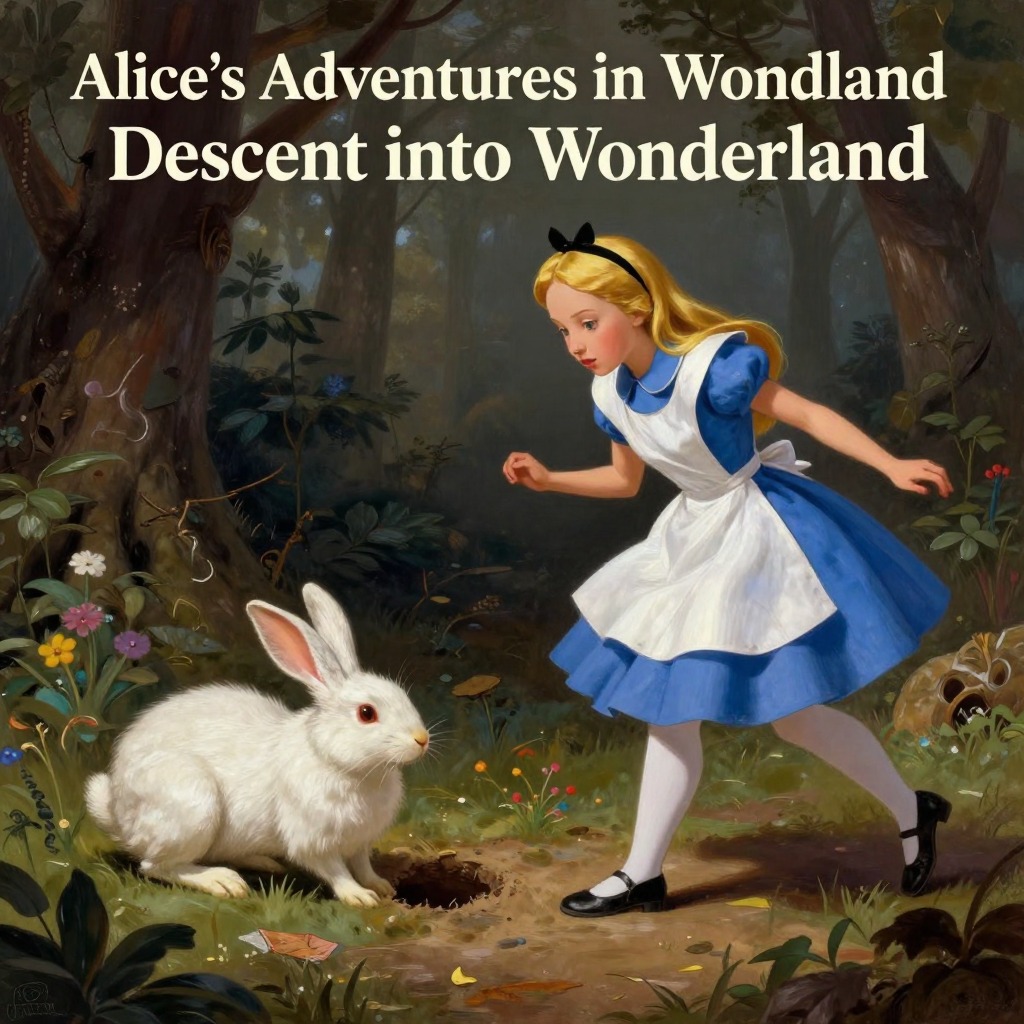
Alice first sees the garden through a tiny door she opens with the golden key, a passage no larger than a rat-hole. She kneels and looks along it into "the loveliest garden you ever saw," with beds of bright flowers and cool fountains. This vision of beauty and calm stands in stark contrast to the dark, locked hall where she finds herself after falling down the rabbit-hole. Her immediate longing is to escape the hall and wander among those flower-beds and fountains, but she cannot fit her head through the doorway. The garden becomes the explicit goal that drives her next actions: she wishes she could "shut up like a telescope" to enter it, and this desire leads her to drink from the DRINK ME bottle and eat the EAT ME cake, each attempt at size change a step toward the garden. Even after she shrinks to ten inches high, she forgets the golden key on the glass table and cannot reach it, leaving her sitting and crying in frustration. The garden remains tantalizingly close yet inaccessible, a symbol of the gap between desire and fulfillment that defines her early ordeal.
The Garden as a Goal and a Disappointment
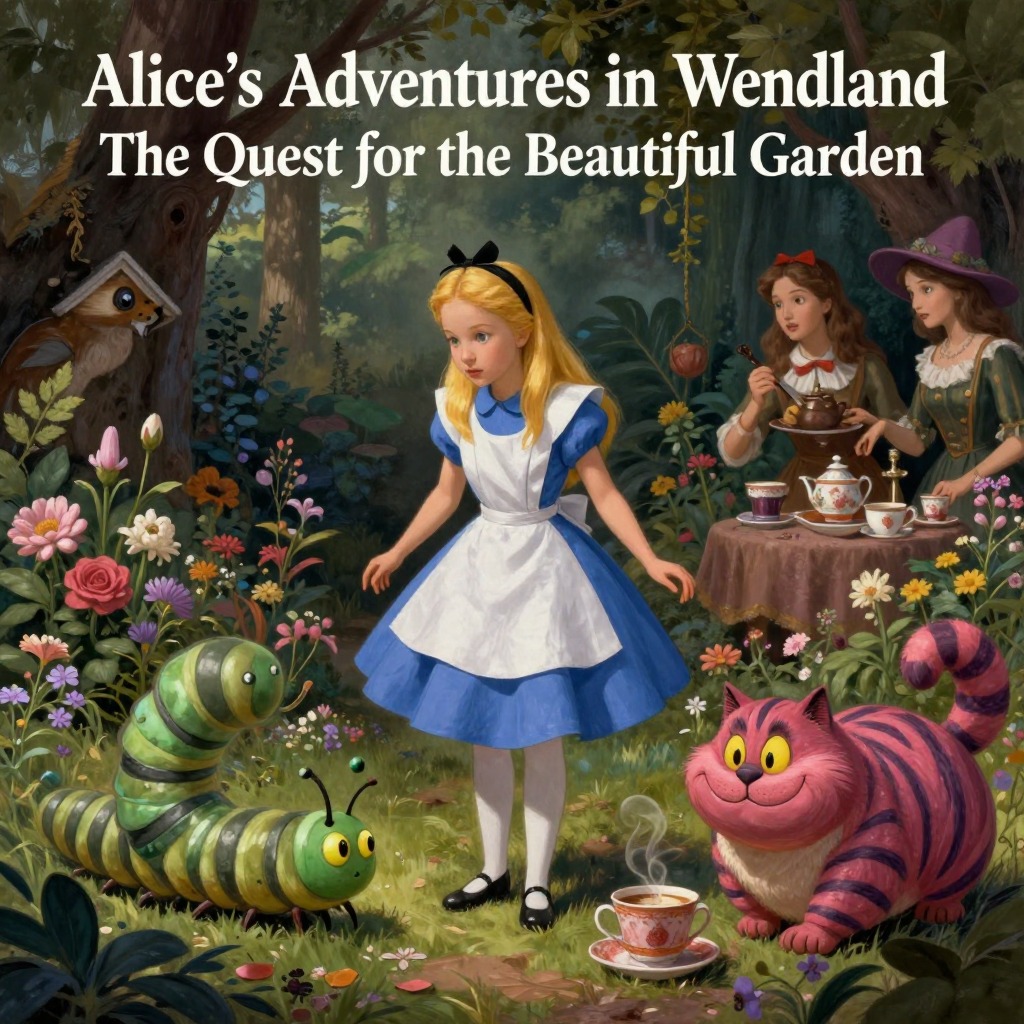
Alice explicitly formulates her plan after escaping the White Rabbit's house: "The first thing I've got to do is to grow to my right size again; and the second thing is to find my way into that lovely garden." This plan, though neatly and simply arranged, proves difficult to execute. She must navigate encounters with the Caterpillar, the Pigeon, the Duchess, and the Cheshire Cat, each of which delays or redirects her. When she finally reaches the garden, it is not the peaceful haven she imagined. She enters the Queen's Croquet-Ground, a space of arbitrary violence and absurd rules. The roses are being painted red to hide a mistake, and the Queen of Hearts immediately threatens to behead the gardeners. The croquet game itself is chaotic: the balls are live hedgehogs, the mallets live flamingoes, and the soldiers must double themselves up to form arches. The garden, far from being a place of escape, becomes the setting for the Queen's reign of terror, where "Off with his head!" is shouted about once a minute. Alice's dream of a lovely garden is thus subverted into a nightmare of arbitrary power, a pattern that continues through the trial scene.
The Garden in the Dream's Resolution
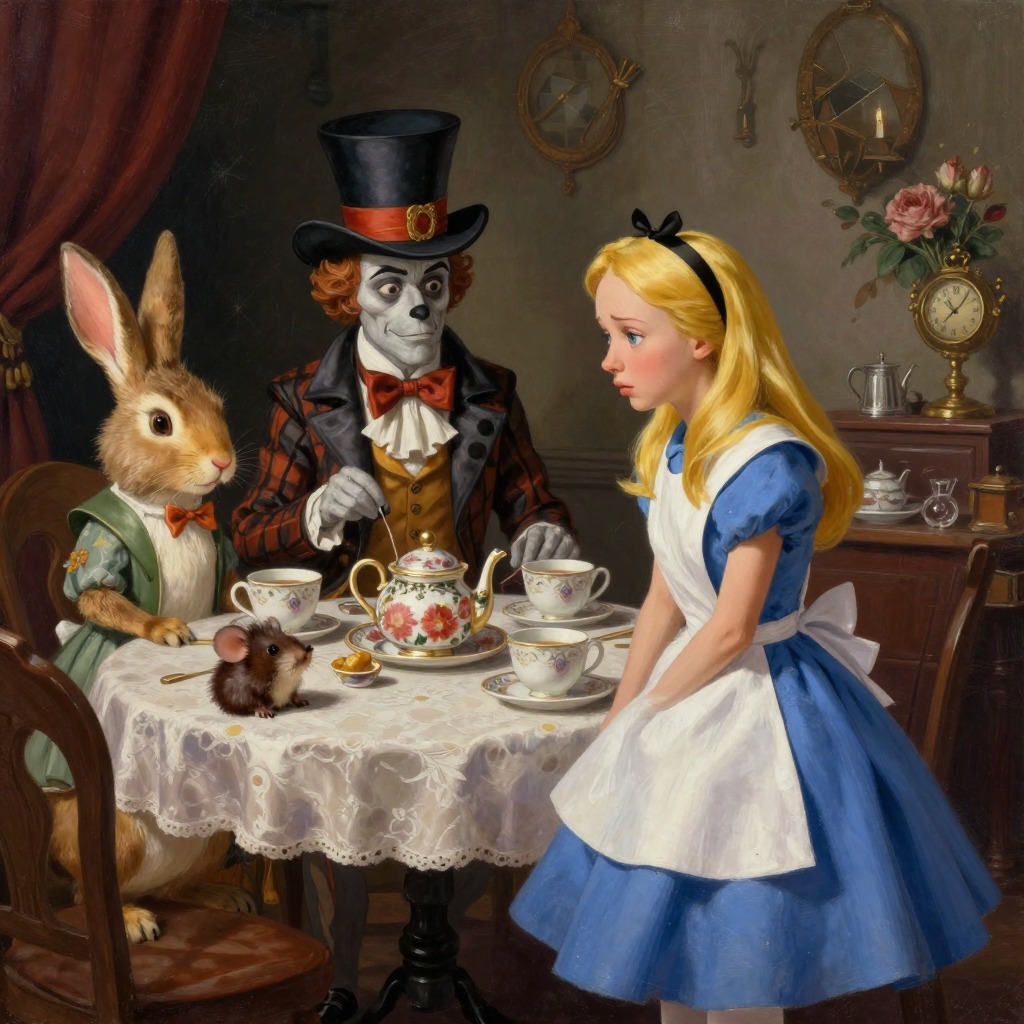
The garden's significance is recontextualized in the story's frame. When Alice wakes on the bank, her sister remains sitting, leaning her head on her hand, watching the setting sun, and thinking of Alice's adventures. In her own dream, the sister imagines the garden transformed: the rattling teacups of the March Hare's tea-party become tinkling sheep-bells, the Queen's shrill cries become the voice of a shepherd boy, and the sneeze of the baby, the shriek of the Gryphon, and all the other queer noises change to the confused clamor of a busy farm-yard. The garden of Wonderland, with its bright flower-beds and cool fountains, is thus reimagined as a pastoral English landscape, its strangeness domesticated into the familiar sounds of rural life. The sister's dream concludes with a vision of Alice as a grown woman, gathering other little children around her and telling them strange tales, perhaps even the dream of Wonderland of long ago. The garden, once a place of desire and danger, becomes a memory that can be passed on, its beauty and absurdity preserved in the act of storytelling. The final image is one of peaceful continuity: the sister sits with closed eyes, half believing herself in Wonderland, though she knows she has but to open them and all will change to dull reality.